🔤 My child mixes up b and d: why, and how to help
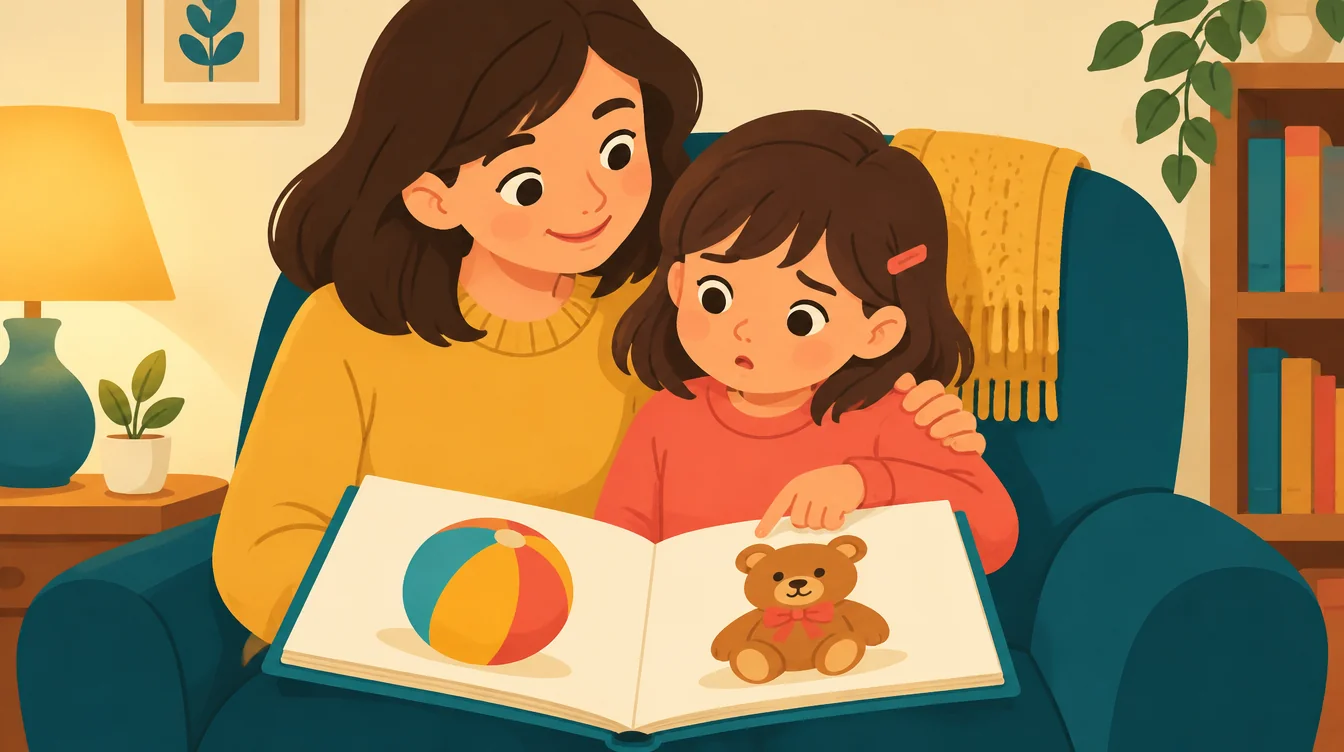
Does your child read “dain” instead of “bain”, or write their d backwards, and you’re starting to worry? Take a deep breath. Mixing up b and d is one of the most common mistakes at the start of learning to read. Here’s why it happens, how you can help with simple tips, and when it’s worth seeking advice.
Mixing up b and d: is it normal?
In Kindergarten and CP, yes, it’s very common. b and d are ‘mirror letters’: the same shape, just flipped. p and q are another pair that can cause the same confusion.
In training for CP teachers, the idea that ‘a pupil who mixes up b and d is dyslexic’ is actually one of the myths to challenge. Mixing up letters on its own is not a diagnosis.
What matters is progress: if the confusion fades with practice, it’s a normal stage. If it persists and comes with other difficulties, it’s worth seeking advice — we’ll come back to this below.
Why mirror letters trick the brain
Our visual system is designed to recognise objects no matter which way they’re facing. A cup with the handle on the left or right is still a cup; a dog seen from the left or right side is still the same dog. Researchers call this ‘mirror generalisation’. It’s very useful in life… but not for reading, because b and d are not the same letter.
When learning to read, your child has to learn to override this instinct. A study by a CNRS lab, published in 2014, even showed that adults still have to inhibit it to read accurately. Your child isn’t being careless: their brain is doing what it’s designed to do, and now it needs to learn an exception.
6 tips to stop mixing up b and d
- One letter at a time. Instead of working on b and d together, focus on one first, with a reference word, before moving on to the other. Comparing two letters you don’t know well yet just adds confusion.
- Focus on the movement. For b, start with the stick, then the belly. For d, start with the round part, then the stick. The hand remembers the order better than the eye.
- Turning c into d. In the alphabet, c comes just before d. And a d is a c with a tall stick added. Have your child write a c, then turn it into a d.
- A picture clue. b as in “balloon”, d as in “doll”: pick a word your child likes, an image, a card stuck above the desk. If they’re unsure, they can compare with their card.
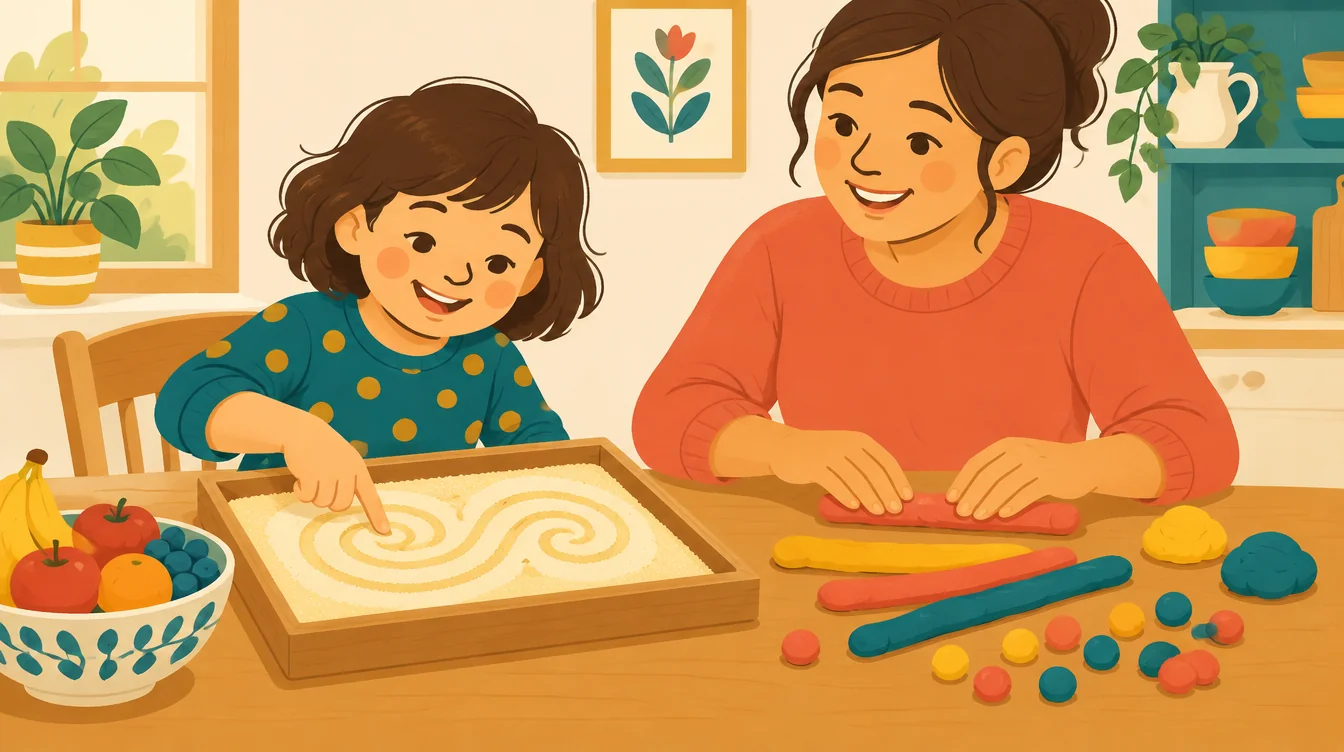
- Letters at your fingertips. Write the letter in a tray of salt or semolina, make it out of playdough, trace it with a finger on a cut-out letter: touch helps reinforce the direction.
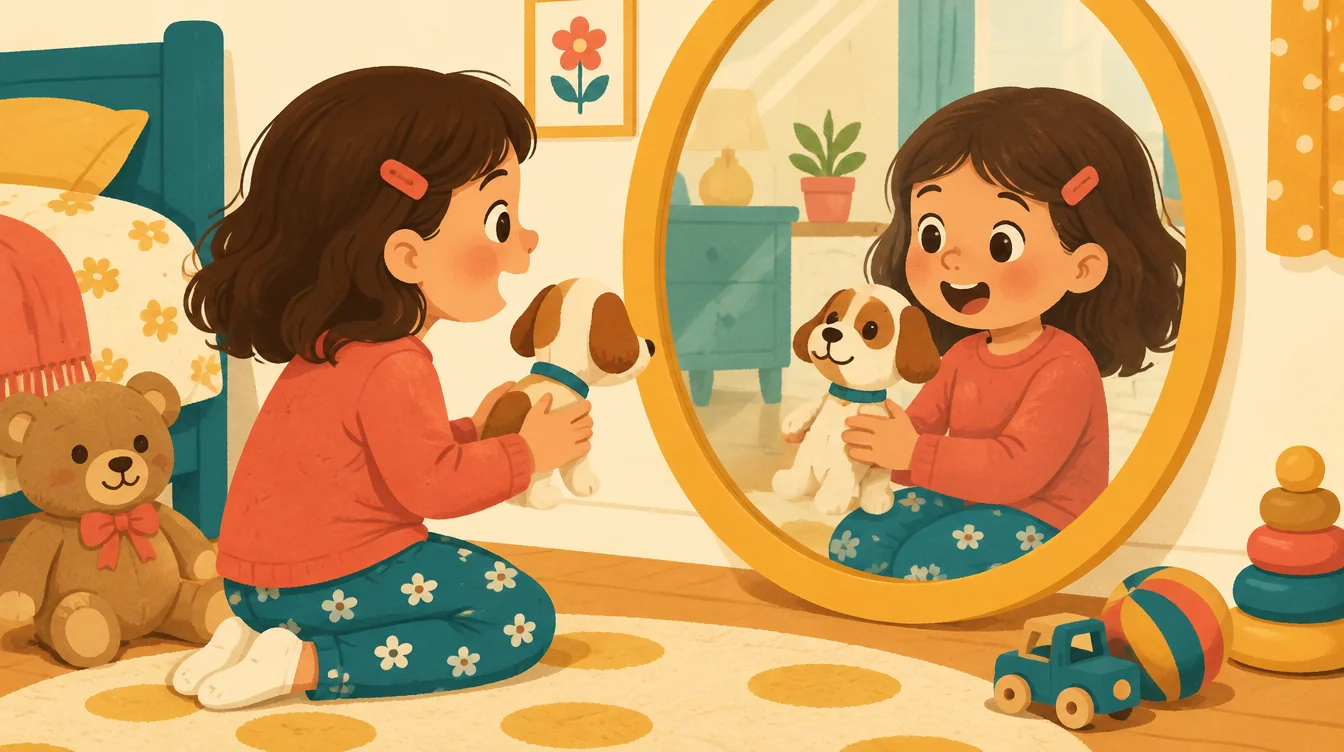
- Listen to your mouth. To say b, the lips close and open. To say d, the tongue taps behind the top teeth. In front of a mirror, the difference is clear.
And what about p and q?
They’re another pair of mirror letters, but less common. Good news: in French, q is almost always followed by u (quand, quatre, qui). Only a few words like “cinq” or “coq” are exceptions. Simple clue: q is almost always next to a u, while p can be followed by any letter.
| Letter | The movement | The clue |
|---|---|---|
| b | Stick first, then the belly | Lips close: b as in balloon |
| d | Round first (like a c), then the stick | Tongue taps the teeth: d as in doll |
| p | Stick goes down, then the round at the top | Lips close, no voice: p as in papa |
| q | Round first, then the stick goes down | Almost always followed by u: qu |
Be careful not to mix everything up: if your child confuses b and p when speaking, or can’t hear the difference between “pain” and “bain”, it’s not about shape but about sound. Talk to their teacher.
5-minute games to reinforce the difference
- Card sorting. Write about ten big b’s and d’s on cards. Your child sorts them into two boxes: the “balloon” box and the “doll” box.
- Letter hunt. On a magazine page, your child circles all the b’s in red and all the d’s in blue. Two minutes, timed.
- The “b or d?” game. You say a word (bouche, douche, bon, don, bord, dort), and your child holds up the right card.
- Read short words. Once the letters are secure, reading a few words and short sentences each day helps build automatic recognition, just like in our printable CP reading sheets.
If your child is learning with a phonics-based method, like the syllabic method, linking each letter to its movement and sound is especially helpful.
When should you talk to the teacher or a speech therapist?
You can speak to the teacher at any time: they see your child read every day and can tell you if the confusion is improving. As for a diagnosis, the French Health Insurance service reminds us that dyslexia can only be reliably identified at the end of CE1 (age 7-8), when a lasting reading delay is observed.
It's a good idea to consult your GP or paediatrician if the confusion continues despite practice and is accompanied by other signs, such as:
- by the end of CP (age 6-7), your child still can't read syllables or makes frequent mistakes;
- in CE1 (age 7-8), reading remains slow, inaccurate, and your child doesn't understand what they read;
- your child refuses to read, gets unusually tired, or no longer wants to go to school.
If needed, the doctor can refer you for a speech and language assessment. In the meantime, keep reading together every day, without pressure: our article on reading fluency suggests a simple ten-minute routine. For quick activities at home, download our free printable workbook.
Want to put these tips into practice?
Every day, a new adventure workbook adapted to your child's school level — to print or do on screen. No commitment.
Your questions
Is confusing b and d a sign of dyslexia?
Not on its own. It's a very common mistake in Kindergarten and CP (age 5-7). According to the French Health Insurance service, dyslexia can only be reliably diagnosed at the end of CE1 (age 7-8), and is based on a set of lasting difficulties.
How can you simply explain the difference between b and d?
By the movement: for b, draw the stick first, then the belly; for d, start with the round shape, like a c, then the stick. An illustrated keyword for each letter helps complete the trick.
Should you practise b and d at the same time?
It's best to strengthen one letter before the other. Comparing two letters that are still tricky often keeps the confusion going.
Who should you talk to if the confusion continues?
Start with the teacher, who sees your child read every day. If the confusion persists and there are other reading difficulties, speak to your GP or paediatrician, who can refer you for a speech and language assessment.
Read next
 Back-to-school prep
Preparing for entry into CP during the summer: the 7 real priorities
Preparing to start CP without cramming: the 7 true summer priorities, what is learned in class, and a 10-minute ritual f…
 Parent guide
Learning joined-up writing: a step-by-step guide for parents
Joined-up writing: when your child should start, pencil grip, letter groups and joins. Easy 10-minute daily routine for …
 Back-to-school prep
Preparing to start 6e (first year of middle school in France): the calm parents' guide for CM2
Prepare for entering 6e (first year of middle school in France) without stress: what changes after CM2, the summer check…
 Parent guide
Children's screen time: what rules should you set at home?
Children's screen time: official age guidelines (3-6-9-12, 2024 report), simple rules for home and ideas for switching o…
 Back-to-school prep
Primary school supplies list: the waste-free guide from CP to CM2
Primary school supplies list for CP to CM2: what to keep, what to buy new, and common stationery mistakes to avoid for a…
 Parent guide
Poor school report: how to respond without crushing motivation
Poor school report? Read teachers’ comments, discuss calmly, find the cause and support your child with a plan for small…